


The energy transition is the mega-project of our time. Wind turbines are spinning, solar panels gleam in the sun – visible signs of the transformation of our energy system. But the real key to a sustainable energy supply is usually hidden: underground. This is where kilometer after kilometer of cables ensure that green energy reliably enters the grid.
Invisible Heroes: Underground Cabling as the Backbone of Wind Energy
Modern onshore wind farms consist not only of turbines, but of a complex network of power lines, connections, transformer stations and interfaces to the public power supply. The cables that connect all these usually run underground – for good reasons:
Advantages of underground cabling:
Protection from external influences: Storms, snow or heat do not affect the supply.
Reduced downtime: Cable systems require little maintenance and are less prone to faults.
Visual integration into the landscape: No pylons, no power lines in the sky.
Safety and environmental friendliness: No risk from falling lines or electromagnetic exposure.
What many underestimate: The cable routes in a wind farm often make up a significant part of the total investment. They are not just a link – they are the critical infrastructure on which everything is built.


Dismantling with a System – Recycling as Part of the Energy Transition
After several decades of operation, every cable infrastructure reaches the point where it must be replaced or completely dismantled. This section does not mark the end of a project, but its final test. Because those who take responsibility from the outset also ensure clear processes, minimal environmental impact and maximum recycling during dismantling.
A well-considered dismantling does not begin with removal, but with a forward-looking choice of materials: homogeneous, recyclable and documented. Metals such as copper or aluminum can largely be recovered, as can certain plastic sheaths. Transport aids such as cable drums can also often be reused or integrated into material cycles.
This is not only about ecological aspects – a planned dismantling also makes sense economically. Projects that are systematically designed for dismantling avoid high disposal costs and meet future regulatory requirements much more easily.
Overall, it becomes clear: Sustainability does not end at the grid connection. It covers the entire life cycle – right up to the last recycled cable. Those who think about infrastructure holistically think it through to the end.
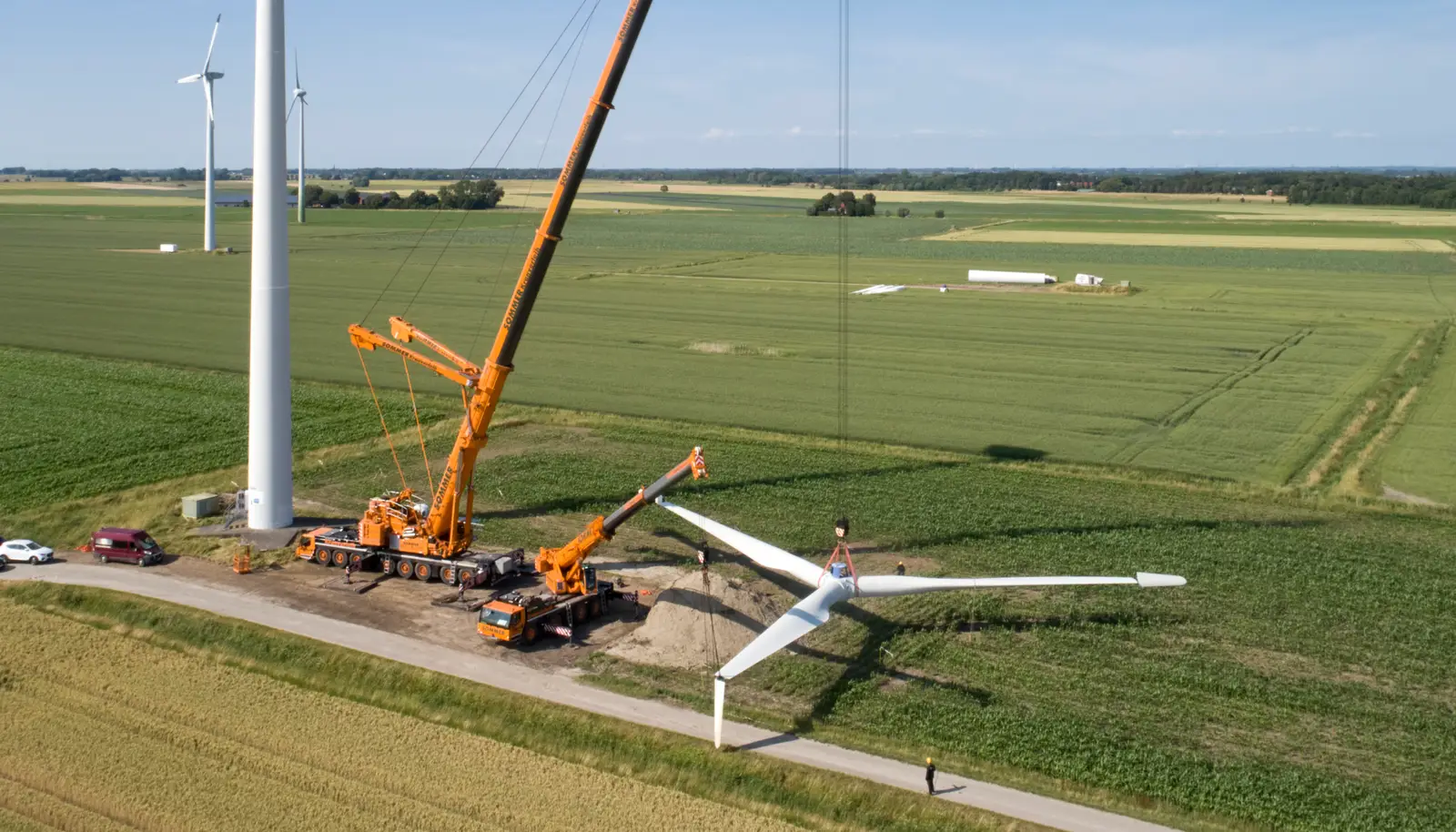
In the following article, you can find out how, for example, wind turbines are recycled:
Conclusion – a Wind Farm is Only as Green as Its Underground
The discussion about renewable energies often revolves around output, storage technologies, and political frameworks. What is rarely discussed is the “invisible part” of the energy transition – what lies underground.
But this is precisely where it is decided whether a project is truly sustainable, scalable, and fit for the future.
In summary:
A well-designed cable infrastructure is a basic requirement for every onshore wind farm.
Sustainability starts with material selection, logistics and dismantling, not just with operation.
Redundant systems ensure long-term network stability – both technically and economically.
The success of the project does not depend solely on the turbine, but on everything that connects it to the grid.
Those who understand this are not just planning a wind farm. They are planning a resilient piece of the future.
💡 Ready to energize your green project?
Whether it’s powering a wind farm or creating a community solar park, we’re here to help. From planning your energy network to delivering top-quality cables like NA2XS(F)2Y, NAYY, and NAYY-J, we make green energy projects a reality.
✅ Fast delivery from our strategic logistics hub.
✅ Sustainable solutions for a greener tomorrow.
✅ Trusted by industry leaders in Germany and the Netherlands.
🌱 Let’s build a greener future together. Contact us today to discuss your project!

